
How to Create a Social Media Strategy: A Simple Step-by-Step Guide
Social media has become one of the most powerful tools for businesses today. Whether you run a small business, a startup, or a large company, social media helps you connect with your audience, promote your products, and grow your brand. However, posting content without a plan often leads to poor results. This is why it is important to understand how to create a social media strategy that supports your business goals.
A social media strategy is a clear plan that guides your activities on social media platforms. It helps you decide what content to post, when to post it, who you want to reach, and how to measure your success. With the right strategy, you can save time, improve engagement, and achieve better results.
Why a Social Media Strategy Is Important
Many businesses create social media accounts and start posting immediately. While this may seem like a good idea, it often leads to inconsistent content and low engagement. A social media strategy gives your efforts direction and purpose.
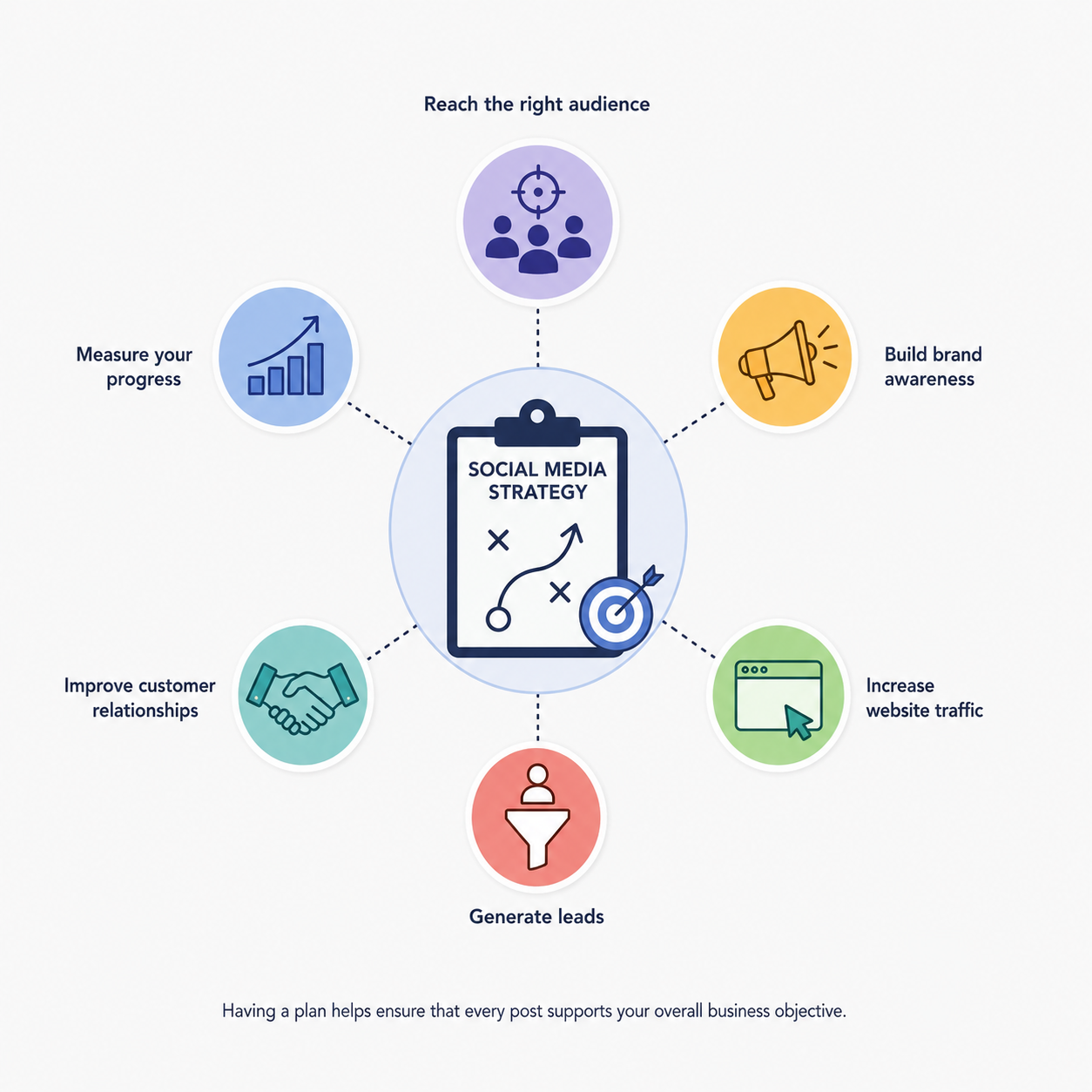
When you know how to create a social media strategy, you can:
- Reach the right audience
- Build brand awareness
- Increase website traffic
- Generate leads
- Improve customer relationships
- Measure your progress
Having a plan helps ensure that every post supports your overall business objectives.
Set Clear Goals
The first step in learning how to create a social media strategy is setting goals. Before creating content, ask yourself what you want to achieve.
Your goals might include:
- Getting more followers
- Increasing engagement
- Driving traffic to your website
- Generating sales
- Building a loyal community
Try to make your goals specific and measurable. For example, instead of saying “I want more followers,” set a goal to gain 500 new followers within three months.
Know Your Audience
Understanding your audience is one of the most important parts of creating a successful strategy. You need to know who your ideal customers are and what they want to see online.
Ask questions such as:
- How old are they?
- Where do they live?
- What are their interests?
- Which social media platforms do they use?
- What problems are they trying to solve?
The better you understand your audience, the easier it becomes to create content they enjoy and engage with.
Choose the Right Social Media Platforms
Not every platform will be suitable for your business. One of the key parts of how to create a social media strategy is choosing platforms that match your audience and goals.
Here are some popular options:
Facebook is useful for community building and advertising.
Instagram works well for visual content such as photos, stories, and reels.
LinkedIn is ideal for professional networking and business-related content.
TikTok is popular for short and engaging videos.
X (formerly Twitter) is helpful for sharing updates and joining conversations.
Focus on quality rather than trying to be active on every platform.
People follow brands that offer useful, entertaining, or inspiring content. Instead of constantly promoting products, focus on helping your audience.
Some content ideas include:
- Helpful tips
- Industry news
- How-to guides
- Customer success stories
- Product demonstrations
- Behind-the-scenes content
- Videos and infographics
Valuable content builds trust and encourages people to engage with your brand.
Consistency is essential for social media growth. A content calendar helps you plan your posts ahead of time and maintain a regular posting schedule.
Benefits of a content calendar include:
- Better organization
- Consistent posting
- Time savings
- Improved content quality
- Easier campaign planning
You can plan content weekly or monthly depending on your needs.
Social media is not just about posting content. It is also about building relationships with your audience.
Respond to comments, answer messages, and take part in conversations. When people feel heard, they are more likely to trust and support your brand.
Engagement can include:
- Replying to comments
- Asking questions
- Running polls
- Sharing user-generated content
- Thanking followers for their support
Strong engagement often leads to stronger customer loyalty.
A successful strategy requires regular monitoring. You should review your performance to understand what is working and what needs improvement.
Important metrics to track include:
- Reach
- Engagement rate
- Website clicks
- Follower growth
- Conversions
- Video views
Most social media platforms provide free analytics tools that help you measure performance.
Make Improvements Over Time
Social media trends change regularly. A strategy that works today may not work in the future. This is why it is important to review your results and make adjustments.
Test different types of content, posting times, and engagement methods. Learning from your data will help you improve your strategy and achieve better results
Conclusion
Learning how to create a social media strategy is essential for businesses that want to grow online. A clear strategy helps you stay focused, create better content, and connect with the right audience.
Start by setting goals, understanding your audience, choosing the right platforms, and creating valuable content. Stay consistent, engage with your followers, and monitor your results regularly. Over time, these efforts can help you build a stronger online presence and achieve long-term success.
Frequently Asked Questions
A social media strategy is a plan that outlines how a business will use social media platforms to achieve specific goals. It includes content planning, audience targeting, posting schedules, and performance tracking.
A strategy helps businesses stay organized and focused. It ensures that social media activities support business goals instead of being random or inconsistent.
Choose platforms where your target audience spends the most time. For example, Instagram is ideal for visual content, while LinkedIn works best for professional and business-focused audiences.
Posting frequency depends on your audience and platform. Many businesses find success by posting three to five times per week while maintaining content quality and consistency
Content that educates, entertains, or solves a problem often performs well. Tutorials, tips, videos, customer stories, and industry insights are popular content formats.
You can measure success through metrics such as engagement, reach, follower growth, website traffic, leads, and conversions. Analytics tools can help you track these results.
Results vary depending on your industry, goals, and consistency. Some businesses see improvements within a few months, while others may need more time to build an audience.